

How to use large and medium tractors


During the use of the tractor, due to factors such as looseness, wear, deformation, fatigue, corrosion, etc., the working ability will gradually decrease or be lost, and the technical state of the whole machine will be abnormal. In addition, the working medium such as fuel oil, lubricating oil, cooling water and hydraulic oil will be gradually cons
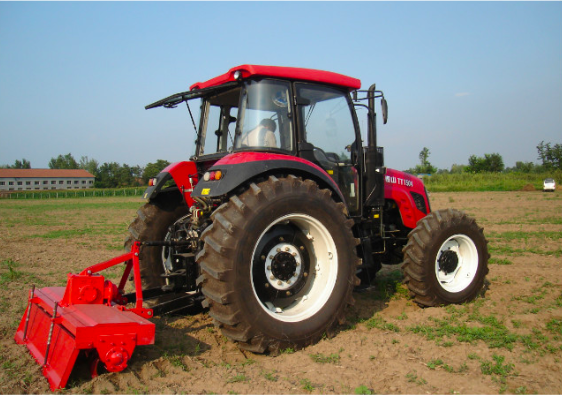
During the use of the tractor, due to factors such as looseness, wear, deformation, fatigue, corrosion, etc., the working ability will gradually decrease or be lost, and the technical state of the whole machine will be abnormal. In addition, the working medium such as fuel oil, lubricating oil, cooling water and hydraulic oil will be gradually consumed, which will destroy the normal working conditions of the tractor and aggravate the deterioration of the technical state of the whole machine.
 
In order to keep the tractor in good technical condition and prolong its service life, the tractor must be properly operated, maintained and adjusted.
 
How to use large and medium tractors?
 
(1) Starting of the engine
 
1. Preparation before starting
 
Before use, careful and comprehensive inspection of the tractor can eliminate hidden troubles and effectively prevent accidents.
 
(1) Check the oil level of the engine oil sump.
 
(2) Check the oil level of the gearbox and rear axle.
 
(3) Check the oil level of the steering tank.
 
(4) Loosen the flame-extinguishing cable locking device to loosen the flame-extinguishing cable and the fuel injection pump is in the oil supply position.
 
(5) Check each of the gearbox levers and the power output joystick so that they are in the neutral position and the hydraulic handle is in the lowered position.
 
2, start the engine
 
Insert the key into the lock, turn the key clockwise to start the engine, and return to the “N” position after starting.
 
(1) Once the engine is running, it should be released immediately.
 
(2) The continuous start-up time must not exceed 15S. (If it can't be started within 15S, it should be stopped for 2 minutes and then restarted. It can't be started for 3 consecutive times. It should be found after the cause is found.
 
(3) After the engine is started, it is idling around 800R/MIN, the water temperature rises above 60°C, and the pressure can be put above the 0.1MPA.
 
(2) The start of the tractor
 
1. The engine is at a low speed, the clutch pedal is depressed, the main clutch is disengaged, and then the transmission shift lever is hung to the desired gear position.
 
2. Sound the number and observe that there are no obstacles around.
 
3. Gradually increase the engine speed and slowly release the clutch pedal to make the tractor start smoothly. Release the clutch pedal after starting to prevent the clutch from slipping.
 
4. Gradually increase the throttle to get the tractor to the required working speed.
 
5. The method of semi-integrated clutch is not allowed in use to reduce the speed of the tractor. Do not place your foot on the clutch pedal while driving to avoid accelerated wear on the separation lever, release bearing and friction plate.
 
(3) Steering of the tractor
 
When the tractor is driving at a high speed, it is important not to use the one-side brake sharp turn. When the current wheel makes a big turn, if there is a click sound when the safety valve acts, the steering wheel should be slightly retracted to avoid overloading the hydraulic steering system for a long time.
 
Before turning or reversing in the field, it is necessary to lift the agricultural machinery parts that have entered the ground out of the ground to avoid damage to the agricultural machinery or cause casualties.
 
When the tractor turns a small bend or turns on a soft land, the steering is not working due to the side wheel slipping. When the steering wheel is turned, the brake pedal on the corresponding side can be depressed to help the steering.
 
(4) Driving of the tractor
 
When the tractor is driving on the road, the interlocking plates are used to lock the left and right brake pedals together. Prevent unilateral braking and cause the tractor to run or roll over. Under normal circumstances, first reduce the throttle, press the clutch pedal, and then press the brake pedal according to the situation to make the tractor stop smoothly. In the case of an emergency stop, the clutch and brake pedals should be depressed at the same time to prevent the brake lining from aggravating wear or extinguishing the engine. When working in the field, you can choose to use one side or full brake according to the actual work situation and needs. When using single-side braking, the interlocking shaft needs to be removed, and the single-side braking needs to be driven at a low speed to avoid deviation.
 
(5) Operation of the differential
 
When the tractor encounters trapping or unilateral driving slip during driving or operation, if the tractor cannot advance, the differential can be engaged as follows to make the left and right drive shafts rigidly connect and drive out of the slipping section at the same speed.
 
1. Press the main clutch pedal and operate the shift lever to hang the low gear.
 
2. Pull the throttle handle to the maximum position.
 
3. Press the differential pedal on the right foot.
 
4. Release the clutch pedal smoothly to make the tractor start smoothly.
 
5. After exiting the slippery section, release the differential pedal and the differential will automatically disengage.
 
6. When driving normally and turning, it is strictly forbidden to use differential lock, otherwise it will damage the machine parts and accelerate the tire wear, and even cause a rollover accident.
 
(6) Operation of power output
 
1. The clutch pedal is stepped on to the bottom, the auxiliary clutch is disengaged, and the power output shaft stops rotating.
 
2. Press the power output shaft lever down and the power output shaft to engage.
 
3. Slowly release the clutch pedal to start the working machine.
 
(7) Tractor parking and engine stall
 
1. Reduce the throttle to reduce the speed of the tractor.
 
2. Press the clutch pedal and then depress the brake pedal. When the tractor stops, place the shift levers in the neutral position.
 
3. Release the clutch and brake pedal and reduce the throttle to make the engine idle.
 
4. The flame-extinguishing lever is pulled backwards, the oil pump stops supplying oil, the engine is immediately turned off, and then the oil supply position is pushed back.
 
5. Turn the start switch key to the "OFF" position and turn off the power switch.
 
6. Pull the parking brake handle up.
 
7. When you have to stop on the slope, you should hang up the gear (hanging forward when going uphill and hanging backward when going downhill) to prevent the tractor from starting suddenly and causing danger.
 
8. If the temperature is lower than 0 °C, the tractor that does not use antifreeze must unscrew the water tank drain valve under the engine idle state, and then stop the flame to stop, so as to prevent the cooling water from freezing and freezing the body.

Последний Новости

Complete Guide to Dozer Plates: Types, Uses, Maintenance & Buying Tips 2026

This 2026 complete guide covers all key information about dozer plates for construction, agricultural, and landscaping equipment. We draw on Weifang Taishan’s 35+ years of manufacturing experience and field testing across hundreds of job sites to share practical, actionable tips for selection, operation, and maintenance. This guide helps both new operators and fleet managers make informed purchasing decisions.

2026-09-04

Everything You Need to Know About Dozer Plates: Types, Uses & Maintenance 2026

This complete 2026 guide breaks down everything you need to know about dozer plates, from core definitions to selection and maintenance. Drawing on hands-on manufacturing and field testing experience from Weifang Taishan Tractor, we share actionable insights, industry data, and answers to the most common dozer plate questions to help you boost work efficiency and extend your equipment lifespan.

2026-08-28

What Is Dozer Plate? Ultimate Buying & Maintenance Guide 2026 | Weifang Taishan

This complete guide covers all core topics about dozer plates, including definition, types, key selection factors, maintenance steps, and common troubleshooting. We draw on over 40 years of manufacturing experience from Weifang Taishan Tractor, 2026 industry data and field testing results to give you objective, practical advice. Whether you are an equipment buyer or maintenance technician, you can get actionable insights here.

2026-08-20

Complete Guide to Dozer Plates: Types, Uses, Maintenance & Top Picks 2026

This 2026 complete guide breaks down everything you need to know about dozer plates, including core definitions, common types, use cases, maintenance best practices, and selection tips. Drawing on Weifang Taishan’s 40+ years of manufacturing experience for global heavy equipment markets and 2026 industry research, we deliver practical, authoritative advice for equipment owners and procurement managers alike.

2026-08-13

Complete Guide to Dozer Plates: Types, Selection & Maintenance 2026

This 2026 expert guide covers all key aspects of dozer plates, including definitions, types, selection criteria, maintenance tips, and answers to frequently asked questions. Drawing on decades of manufacturing experience from Weifang Taishan Tractor, it provides actionable insights for contractors, equipment owners, and procurement teams to choose the right dozer plate and extend service life.

2026-08-06

Dozer Plate 101: Types, Uses, Maintenance & Top Recommendations 2026

This complete 2026 guide breaks down everything you need to know about dozer plates, including core definitions, common types, selection steps, maintenance best practices, and answers to frequently asked questions. Backed by Weifang Taishan’s manufacturing experience and industry data, it helps equipment owners, operators, and procurement managers make informed purchasing decisions.

2026-07-30

taishan

Apply For Discount !

24 hours online service

Provide you with free industry solutions

Гарантия качества

%{tishi_zhanwei}%